
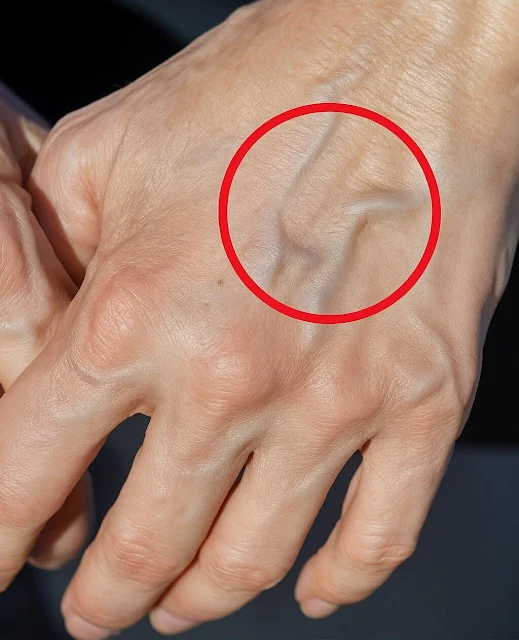
Let me start with reassurance. Most new visible veins are not a sign of disease.
You probably don’t need to worry if:
The vein is flat (not raised or bulging)
There’s no pain, warmth, or redness
The vein appeared gradually (over weeks or months)
You have visible veins elsewhere on your body (symmetrical)
You know a likely cause: recent weight loss, pregnancy, aging, starting a new exercise routine
These are almost always normal anatomical or lifestyle changes. Your body is not betraying you. It’s just changing.
When Should You Worry? (The “Pay Attention” List)
Now let’s talk about when a new visible vein deserves medical attention.
1. Sudden, Bulging Vein in One Leg (Possible DVT)
This is the most urgent scenario.
What it looks like: A sudden, firm, bulging vein in ONE leg (not both). Often accompanied by swelling, pain, warmth, or redness in that leg. The leg may feel heavy or achy.
What it could be: Deep vein thrombosis (DVT) – a blood clot in a deep vein.
Why it’s dangerous: A DVT can break loose and travel to your lungs, causing a pulmonary embolism (PE), which is life-threatening.
What to do: If you have sudden, painful swelling in one leg – especially if you have risk factors (recent surgery, long travel, pregnancy, cancer, or a family history of clots) – seek medical attention immediately. Do not massage the leg.
2. New Varicose Veins (Twisted, Bulging, Rope-Like)
What they look like: Raised, twisted, rope-like veins that bulge above the skin’s surface. Often blue or purple. May be accompanied by aching, heaviness, itching, or burning.
What they could be: Varicose veins – weakened vein valves that allow blood to pool.
Are they dangerous? For most people, varicose veins are a cosmetic concern and a source of discomfort – not a medical emergency. However, they can lead to complications: skin ulcers, bleeding, superficial blood clots, or chronic venous insufficiency.
What to do: See your doctor if they cause pain, swelling, skin changes, or bleeding. Compression stockings and lifestyle changes help. Procedures like sclerotherapy or laser therapy are options for severe cases.
3. New Spider Veins (Suddenly Appearing in Large Numbers)
What they look like: Flat or slightly raised, web-like networks of tiny red, blue, or purple veins. Common on legs, face, and chest.
What they could be: Spider veins – dilated superficial blood vessels.
Are they dangerous? Spider veins are almost always harmless – a cosmetic concern, not a medical one.
What to do: If you’ve had a few spider veins for years and they’re stable, nothing. If they suddenly appear in large numbers – especially if they’re accompanied by pain or swelling – mention it to your doctor.
4. Veins on Your Chest or Abdomen
What they look like: New, visible veins on your chest, breasts, or abdomen.
When it’s normal: During pregnancy (increased blood volume), after weight loss (less fat covering veins), or with fair skin.
When to worry: If new chest veins appear suddenly, especially if they’re accompanied by swelling of the face, neck, or arms, or shortness of breath. This could indicate superior vena cava syndrome (SVCS) – a rare but serious condition where blood flow from your upper body is partially blocked.
What to do: If you have new chest veins PLUS swelling or breathing trouble, seek medical attention promptly. If you have no other symptoms, mention it at your next checkup.
5. Veins That Bleed or Ulcerate
What it looks like: A visible vein that breaks open and bleeds (even slightly), or the skin over a vein breaks down into an open sore (ulcer).
What it could be: Severe varicose veins or chronic venous insufficiency.
Are they dangerous? Bleeding can be heavy (veins are under pressure). Ulcers can become infected.
What to do: See a doctor. Do not try to treat this at home.
The New Vein Checklist (What to Tell Your Doctor)
See more on the next page to continue reading →
ADVERTISEMENT
