
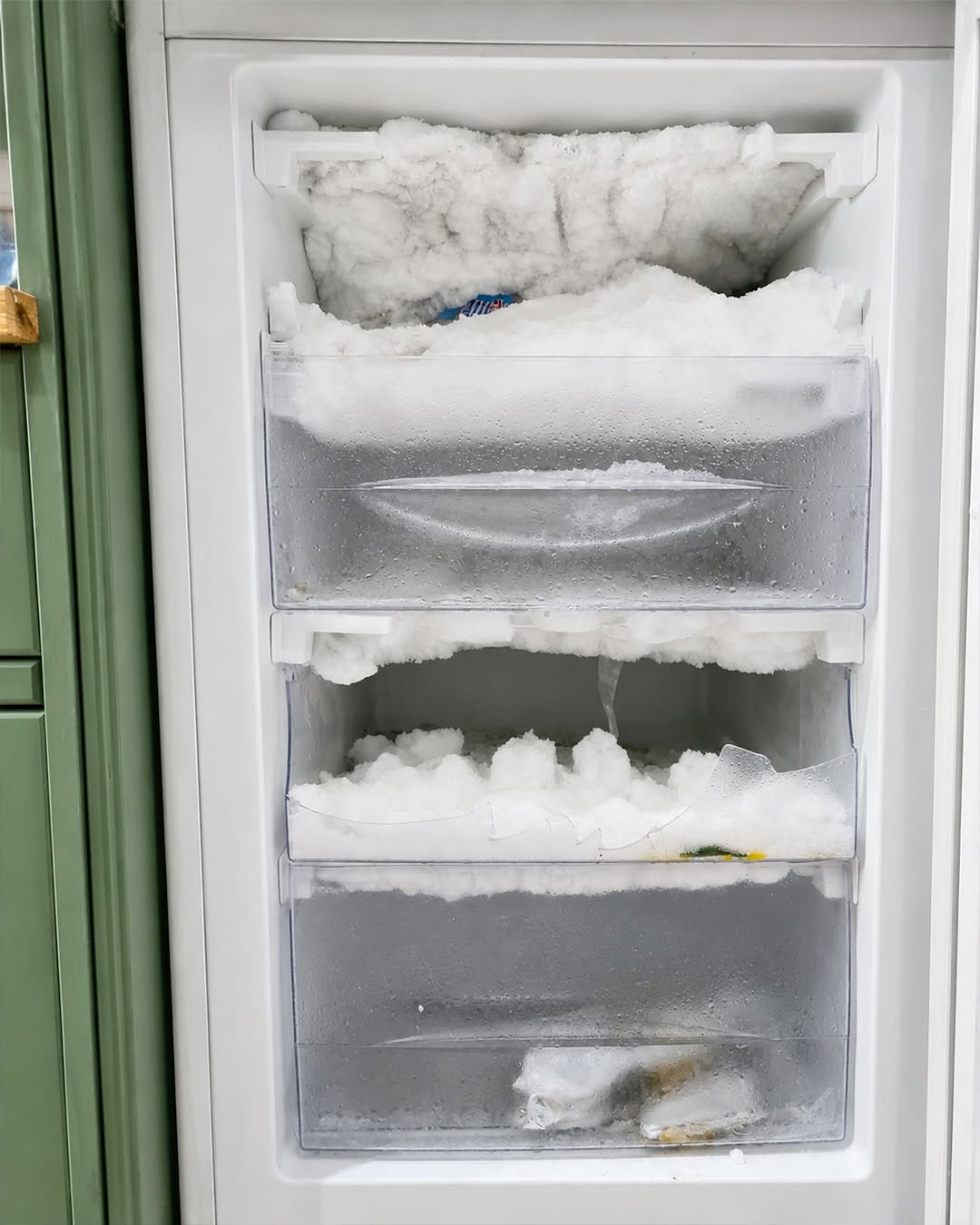
At first glance, it sounds incredibly tempting! Who wants to pull heavy appliances out of the socket or wait hours for the ice to melt?
But – and I have to be a bit of a joy killer here – defrosting your freezer without turning it off is not a great trick, but rather a complete myth. It’s not a good idea for your appliance or your wallet.
Here’s why you should always unplug it and how you can speed up the process dramatically:
Why “unplugging” backfires
If you try to remove the ice while the freezer is running (e.g. with hot water or scraping it), the following will happen:
The compressor breaks down: The freezer’s thermostat detects a sudden warming. The appliance tries its best to compensate for this and continuously cools at maximum power. This consumes a lot of electricity.
Risk of overheating: The compressor can overheat and be damaged by this constant load.
Rapid ice formation: Because the cooling system is running, the warm, humid air you let in immediately condenses on the walls. So you are essentially creating new ice immediately.
Risk of death from scraping: If you use a knife or scraper while the appliance is running, you can puncture the cooling pipes. The casing is under voltage and the refrigerant leaks out – the appliance is then usually destroyed.
A real “smart and quick” trick (with the plug unplugged):
You don’t have to sacrifice an entire day, however. If you have unplugged it, you can speed up the process considerably with this simple physical trick:
The bowl method:
Unplug the appliance from the mains (or switch it off completely via the display).
Temporarily store all food in cooler bags or boxes with cooler bags.
Tasty food blog
Place the bowl of boiling water on a towel or freezer mat.
Close the door.
Effect: The hot steam will cause the ice to break off in large pieces from the walls within 15 to 20 minutes. Simply remove it and wipe the appliance dry.
Extra tip for the future:
After defrosting, lightly rub the clean and dry interior walls with a little neutral cooking oil or glycerin. This will make it much harder for new ice to stick and even easier to remove later!
ADVERTISEMENT
