
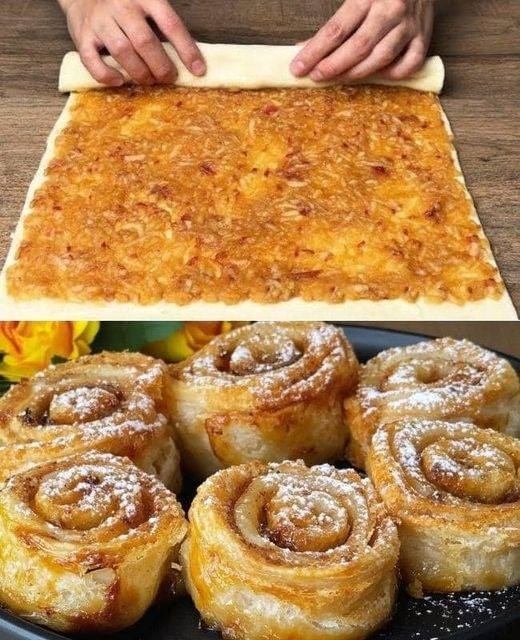
This apple puff pastry roll recipe is a simple yet elegant baked dessert that highlights how a few basic ingredients can be transformed into something warm, flaky, and comforting. Puff pastry is especially useful for quick baking because it creates a light, airy texture with minimal effort. Combined with grated apples, sugar, and cinnamon, this recipe delivers a classic flavor that works for many occasions, from casual family snacks to coffee-time treats for guests.
Ingredients
500 g puff pastry (thawed if frozen)
3 medium apples (sweet or slightly tart varieties such as Golden, Fuji, or Granny Smith work well)
50 g sugar (adjust according to the sweetness of the apples)
5 g ground cinnamon
1 egg, for brushing
Preparation
Start by preparing the apples, as they are the main filling for this pastry. Peel all three apples thoroughly, removing any bruised or damaged areas. Using a coarse grater, grate the apples into a medium-sized bowl. Grating rather than slicing allows the apples to soften quickly in the oven and distribute evenly throughout the pastry.
If the apples release a large amount of juice after grating, lightly press them with a spoon or your hands to remove excess liquid. This step helps prevent the puff pastry from becoming soggy during baking.
Add the sugar and ground cinnamon to the grated apples. Stir the mixture well until the sugar and cinnamon are evenly incorporated. Let the mixture rest for a few minutes so the flavors can combine.
Next, prepare the puff pastry. Lightly dust your work surface with flour to prevent sticking. Place the puff pastry on the surface and gently roll it out with a rolling pin. Aim to create a large rectangular sheet with an even thickness throughout. An even thickness ensures that the pastry bakes uniformly and puffs evenly in the oven.
Once the pastry is rolled out, spoon the apple mixture onto the surface. Spread it evenly from edge to edge, but leave a small border of about 2 centimeters around all sides. This border is important because it helps seal the roll and keeps the filling from leaking out during baking.
Starting from one long edge, carefully roll the pastry into a log. Roll slowly and evenly, keeping the log firm but not tight. If rolled too tightly, the pastry may not puff properly. Once fully rolled, place the log seam-side down to help it hold its shape.
continued on next page
ADVERTISEMENT
